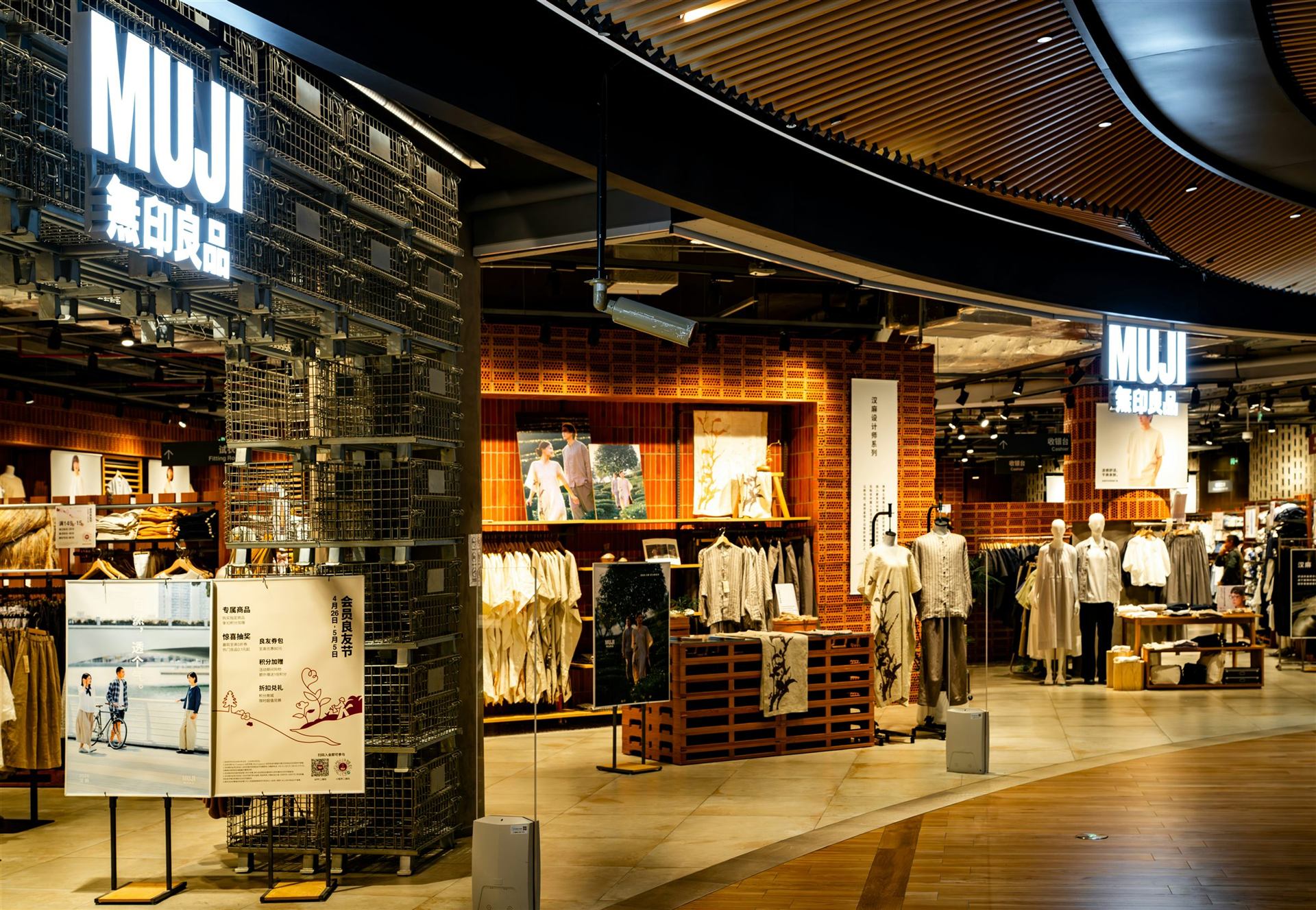
See3D is a London-based virtual tour company that scans commercial spaces for businesses across the UK. One of the clearest ROI cases we see in the field is retail — specifically, the difference between a customer who has browsed your space online before visiting and one who arrives cold from a search result. This post covers why virtual tours work particularly well in UK retail, which types of space benefit most, and what the process actually involves on scan day.
Why do retail customers research spaces before visiting?
The decision to travel to a physical shop is increasingly made online. For high-consideration retail — furniture, flooring, lighting, fashion, specialist equipment — customers are often evaluating multiple options before committing to a visit. They want to know the space before they're in it: what the atmosphere is like, whether the selection looks right, whether the layout suits browsing or requires assistance.
A virtual tour answers those questions at the research stage. Independent research commissioned by Google in 2015 found that businesses with a virtual tour on their Google listing are twice as likely to generate interest — measured as reservations and in-person visits. While that research is now a decade old, the direction of travel has accelerated, not reversed: online research before physical retail visits is now baseline consumer behaviour, not the exception.
The practical effect for retailers is that a customer who has explored your space virtually arrives with intent. They've seen the floor, the layout, the range. They're not walking in on a guess.
Which retail spaces benefit most from a virtual tour?
Not every retail space needs a virtual tour equally. The strongest use cases share a common characteristic: the space itself is part of the value proposition.
Furniture and interiors showrooms are the clearest fit. Customers are making decisions about pieces they'll live with for years. Seeing scale, proportion, and how a piece sits in a properly lit showroom context — even virtually — materially reduces uncertainty before visiting. A 134-megapixel panorama at 16K resolution shows fabric texture, finish quality, and spatial relationships in a way that product photography alone cannot.
Fashion boutiques and concept stores where the physical environment is a deliberate extension of the brand benefit similarly. The store isn't just a place to buy things; it's part of the experience. A virtual tour communicates that experience to someone deciding between you and an online-only alternative.
Specialist trade and independent retailers — tool suppliers, audio equipment dealers, architectural salvage yards, antique dealers — often have complex, varied stock that's difficult to communicate through product pages. A navigable tour of the space is significantly more informative than a gallery of individual items.
Car showrooms represent a strong use case that we cover separately in our car showroom virtual tour post. The principle applies across any high-value purchase environment.
The virtual showroom: bring your store to life online
The forward-thinking move for brick-and-mortar retail is to treat the tour as a virtual showroom — a virtual shopping experience that works outside business hours, when your high street shopfront is dark but your online presence isn't. A 360° interactive showroom tour lets a shopper explore your shop from a laptop or phone, zoom in on product displays, and click hotspots that showcase products with prices, video content or a link straight to the e-commerce product page. That's the seamless integration that turns an immersive 3D experience into online sales — and the in-store experience into something a customer can preview before they visit in person.
It also outperforms the alternatives at the same job: professional photography sets the first impression but freezes one angle; a brochure dates the day it's printed; 360 video plays on rails. An interactive walk-through gives potential customers control, and that control builds customer confidence — the high-end furniture showroom, flagship boutique and high-value specialist retailer all use virtual tours the same engaging way: less uncertainty, more foot traffic, better-qualified enquiry volume. Retailers who create a virtual tour to showcase their spaces consistently report the same immersive virtual experiences driving customer engagement that the big chains pay agencies to build.
How does a virtual tour integrate with Google Maps for retail?
For UK retailers operating in competitive local search environments, a 360° virtual tour on your Google Business Profile is a practical signal differentiator.
Google allows businesses to embed virtual tours directly into their Maps listing. When a customer searches for a furniture showroom in south-west London, or a specialist lighting retailer near them, listings with virtual tours are visually distinct from those without — and the tour is accessible directly from the search result, without a click-through to the retailer's website.
The same Google-commissioned research from 2015 found that 67% of respondents wanted more businesses to offer virtual tours. The supply gap in UK retail remains real: most independent retailers do not have one. That gap is an opportunity, particularly in local search where the ranking field is small and visual differentiation carries weight.
What are the operational and planning applications?
The customer-facing application is the most obvious, but not the only one worth considering.
Staff training and onboarding. A navigable, accurate representation of the shop floor — with spatial dimensions accessible through the tour interface — is useful for training new staff on store layout, product placement, and navigation before their first day on the floor.
Fit-out and planning submissions. If a retail unit is being refitted or extended, a pre-refurbishment scan provides an accurate baseline record of the space. For planning submissions, a documented 3D representation of existing conditions is increasingly useful supporting material.
Insurance documentation. A timestamped 134-megapixel record of the space — contents, fixtures, layout — is a meaningful reference document for insurance purposes, particularly for retailers with bespoke shopfitting or high-value display inventory.
What does scanning a retail space actually involve?
The Realsee Galois M2 is the camera See3D uses for all scans. It captures 134-megapixel panoramas at 16K resolution — comparable to the Matterport Pro3, the current benchmark in commercial virtual tour cameras. We handle every scan personally; no outsourcing.
For a mid-sized retail unit of 200–500 sq metres, scanning typically takes two to four hours, depending on layout complexity and the number of scan positions needed for complete coverage. We work around trading hours where possible — early morning before open, or after close — to minimise disruption to the shop floor.
From site visit to live tour: 3–5 working days.
The delivered tour is hosted with flexible options, including permanently hosted tours with no recurring fees. The embed code goes on your website, into your Google Business Profile, and anywhere else you publish it — without a subscription running in the background.
If you want to understand what the process looks like across a commercial space more broadly, our virtual tour for commercial property post covers it in broader terms. For London-specific context, see our virtual tour London guide.
Sources & references
- Google (2015). Independent consumer research commissioned by Google (n=1,201). Conducted July–August 2015. Via: streetvisit.com — Note: 2015 data, used as directional context with year disclosure.
- Fortune Business Insights (2024). Virtual Tour Software Market Report. fortunebusinessinsights.com