Google Business Profile is where a large share of local commercial decisions get made. A hotel, restaurant, venue, or retail space with a well-optimised profile gets seen before any website visit occurs. Most businesses treat it as a directory listing: name, address, hours, photos. That is leaving something on the table.
A virtual tour embedded on your Google Business Profile changes what a prospective customer can do before they visit — and changes how Google's own systems interpret and surface your listing. The relationship between 360° content and local search performance is well-documented. The mechanics of how it works, and what it actually changes for a UK business in 2026, are less often explained clearly.
Quick takeaways
- Independent research commissioned by Google in 2015 found businesses with a virtual tour on their listing were twice as likely to generate interest compared to those without
- Virtual tours must be captured by a Google Street View trusted photographer to publish on Google Business Profile — not every tour format is compatible
- The Google Business tour and the website-embedded tour serve different parts of the decision journey — both have value
What a Google Business Profile virtual tour actually is
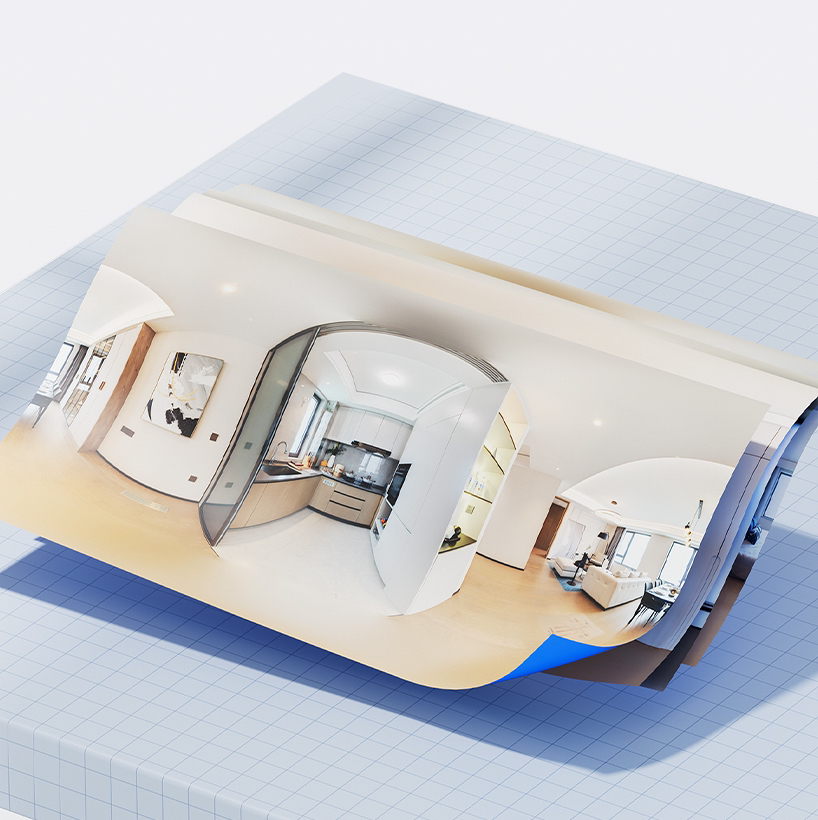
A virtual tour embedded in a Google Business Profile is a navigable 360° walkthrough of your interior, accessible directly from your listing in Search and Maps results. It does not require the viewer to visit your website or download anything. When someone searches for your business — or searches for a category of business near them — and your profile is shown, the virtual tour appears alongside your photos in the listing. On desktop it is viewable inline; on mobile it opens within the Google Maps app.
The tour is indexed by Google as part of your profile content. This is distinct from embedding a tour on your own website — the Google Business integration makes the content searchable and visible at the point where many local decisions are already being made.
What the research says about virtual tours and local engagement
The most-cited evidence for the commercial impact of virtual tours on Google listings comes from independent research commissioned by Google in 2015, which surveyed 1,201 people who had searched for a hotel, restaurant, or local business in the preceding 30 days.
The findings: businesses with a virtual tour on their Google listing were twice as likely to generate interest — measured as reservations made and in-person visits — compared to businesses without one. People aged 18–34 are 130% more likely to book a business that has a virtual tour on its listing. And 67% of respondents said they wanted more businesses to offer virtual tours.
These figures are now over a decade old, and the research was commissioned by Google rather than an independent academic body — both worth noting. But the direction of the finding has only strengthened as virtual content has become more expected rather than novel. A listing with no visual content of the interior is increasingly treated with the same scepticism as a listing with no photos.
How Google surfaces 360° content in local search
Google does not publish its full local ranking algorithm, but the practical effects of 360° content on listing performance are observable. Engagement signals matter: time spent interacting with a listing, and the nature of that interaction, influences how Google assesses relevance and quality. A 360° tour generates significantly more interactive engagement than a static photo gallery — users navigate between rooms, zoom in, and return. These signals feed into local ranking calculations alongside review volume, recency, and profile completeness.
Profile completeness is also a factor Google explicitly rewards. A virtual tour is listed as one of the content types that contributes to profile completeness scores, alongside photos, hours, services, and Q&A responses. And through Street View integration, virtual tours added via Google's trusted photographer programme appear alongside Street View — so the interior walkthrough is accessible from the same entry point as the exterior street-level view.
Which businesses benefit most
The effect is most pronounced for businesses where the interior is a primary factor in the booking or visit decision. Hotels and venues: a prospective guest assessing two hotels at the same price and location is making a decision substantially influenced by the quality and character of the space. A virtual tour from the Google listing removes the need to leave Google to assess this. Restaurants and bars: atmosphere is a purchase driver. A restaurant that lets a diner explore the dining room and bar area directly from Google search results is demonstrating confidence in the space. Retail and showrooms: a car showroom, furniture showroom, or high-end retail space that shows its full interior on Google communicates scale, layout, and quality at zero friction. Hospitality and leisure: wedding venues, event spaces, and private members' clubs benefit because their clients — brides, event coordinators, PAs booking corporate dinners — make shortlist decisions based on atmosphere and layout before ever contacting the venue.
What a Google Business virtual tour requires
A 360° tour published to Google Business Profile must be captured by a Google Street View trusted photographer using 360° equipment that meets Google's technical standards. This is not the same as uploading standard photos or embedding a third-party tour link.
See3D's Realsee Galois M2 captures at 134 megapixels and 16K resolution. Processed tours can be prepared in the format required for Google Street View publication, alongside — or independently of — the full Realsee-hosted interactive tour. The two are not mutually exclusive: a business can have a high-resolution Realsee tour on its website and a separate publication on Google Business Profile. For most clients, getting both from a single scan day is the most efficient approach.
Sources & references
- Independent research commissioned by Google, 2015. "Businesses with a virtual tour on their Google listing are twice as likely to generate interest." Sample: 1,201 respondents who searched for a hotel, restaurant, or local business in the prior 30 days. streetvisit.com
- Same research: "People aged 18–34 are 130% more likely to book a business that has a virtual tour."
- Same research: "67% of respondents said they wanted more businesses to offer virtual tours."