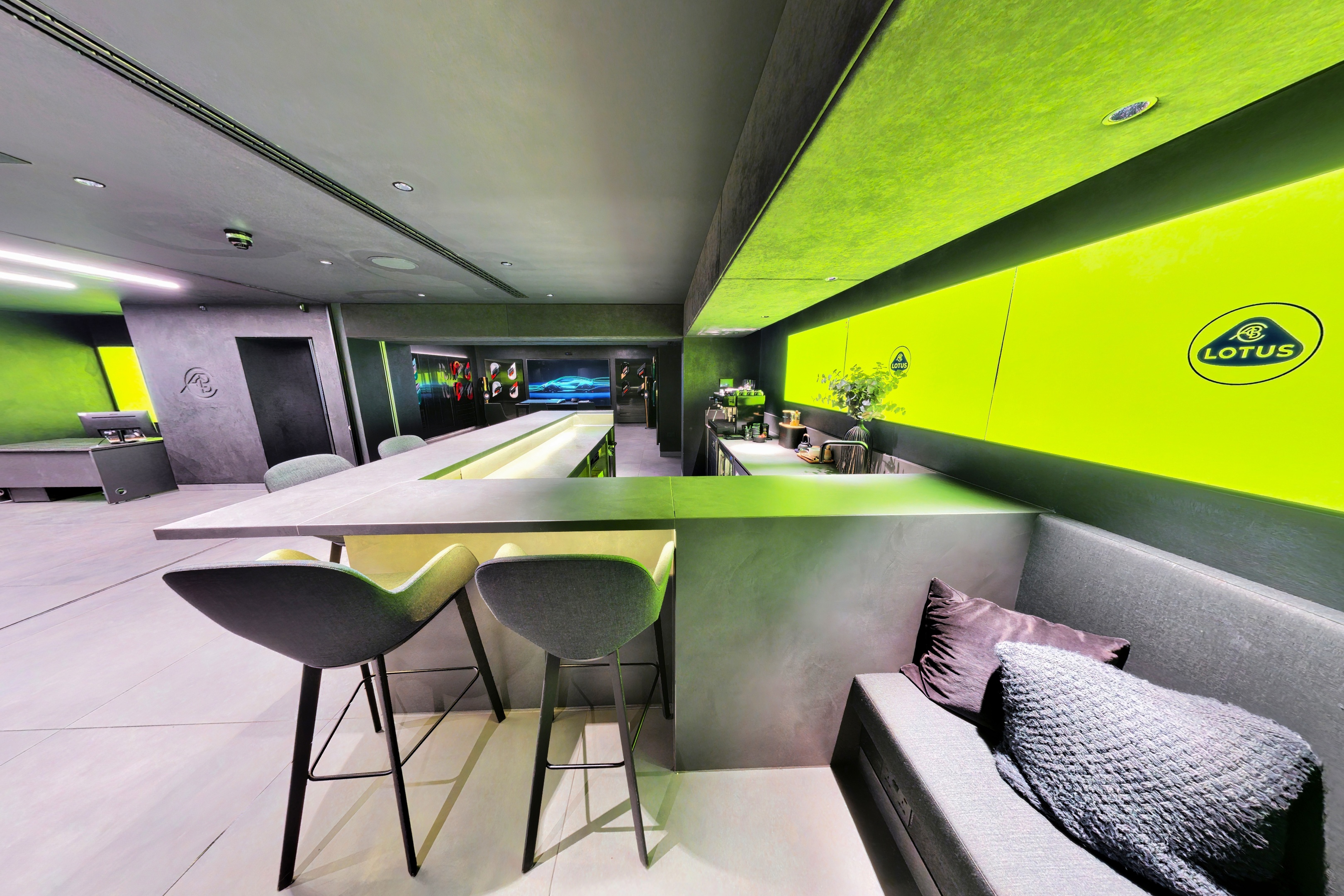
Two quotes for the same brief — a commercial property of around 3,000 sq ft, one 360° tour, embed code delivered. Quote one is significantly lower than quote two. The obvious question: what's the difference?
The answer is almost always some combination of camera resolution, turnaround time, hosting arrangement, and who actually does the scan. Understanding what drives price variation makes it easier to evaluate quotes honestly — and to calculate whether the investment makes financial sense for your business.
Quick takeaways
- Price is driven by space size, deliverables, and hosting model — not just scan time
- Total cost of ownership (scan + all hosting fees over 3 years) is the right comparison metric — not day-one price alone
- A peer-reviewed study found virtual tours associated with ~2% higher closing prices — meaning the scan cost is often recovered on a single transaction (Journal of Real Estate Literature, 2021)
What factors determine the price of a virtual tour
Space size and scan complexity
Virtual tour pricing is usually driven by the number of scan positions required, which scales with floor area, ceiling height, number of floors, and the complexity of the layout. A 500 sq ft retail unit is a different job from a 5,000 sq ft multi-floor commercial space with a mezzanine.
Access complexity also affects time on site: properties with security sign-in procedures, restricted access corridors, or multiple building entrances require more scheduling and coordination.
Deliverables included
A virtual tour-only commission is one scope. Add floor plans and you add processing time. Add LiDAR point cloud data and you add a technical deliverable that requires different equipment and post-processing expertise. Add drone footage and you add a separate mobilisation.
Most See3D quotes are for a combination of these deliverables — the tour itself, a floor plan, and where relevant, point cloud data for technical teams. Confirm at the briefing stage exactly what's included, what's optional, and what you'd need to commission separately.
Hosting model
This is where two otherwise comparable quotes can diverge significantly over time. Some virtual tour providers operate on a subscription hosting model — you pay to keep your tour live. For a commercial agent managing dozens of active listings, or a construction firm running quarterly as-built surveys, this compounds.
See3D offers flexible hosting options, including permanently hosted tours with no recurring fees. The exact arrangement depends on the package — we'll confirm this upfront in writing so there are no surprises at renewal.
Who does the scan
Some providers operate as brokers: they take the instruction and send a third-party operator. We handle every scan personally. The same people you speak to when you enquire are the people who show up on site. That's relevant to pricing because it affects reliability, not just logistics.
Understanding total cost of ownership
The day rate or project fee is the most visible number. Total cost of ownership — what the tour actually costs over three years, including hosting and any re-shoots or updates — is the more useful figure.
Consider a tour commissioned today and used continuously for three years. Under a subscription hosting model, the hosting cost accumulates on top of the original production fee. Under a permanently hosted model with no recurring fees, the cost is fixed at the point of production.
For a single tour, the difference may be modest. For a property portfolio, a hotel group, or a professional services firm with multiple sites, the three-year comparison becomes material. We're happy to model this for your specific situation.
What's typically included — and what isn't
Usually included in a standard quote:
- Travel to site (within Greater London)
- Site visit and scanning
- Post-processing and tour assembly
- Hosted tour link
- Embed code (iframe) for your website
- Shareable URL for direct distribution
Typically additional:
- Floor plans (dimensional, styled for marketing or technical use)
- LiDAR point cloud data
- Drone and aerial footage
- Multi-site packages (where travel is outside Greater London)
- Rush delivery (within 24–48 hours rather than 3–5 working days)
Types of virtual tour — and how the pricing structure differs
"Virtual tour" covers several distinct products, and the type of virtual tour you choose moves the price more than anything else. Published price lists from UK virtual tour companies give a useful market picture for 2026:
Google virtual tours. A set of 360-degree virtual panoramas connected to your Google Business Profile and published to Google Street View, usually priced per 360 scene. These property tours are the entry point — published UK virtual tour prices start around £500–£550 — and they directly improve how your business appears in Maps and local search.
Matterport 3D tours. A 3D scan of the physical space producing the familiar 3D dollhouse view, 3D maps and 2D and 3D floor plans (Matterport markets its 3D model data for better property insights). Matterport virtual tours are typically quoted from a similar capture price — but hosting sits on a monthly subscription, which changes the three-year arithmetic, as covered above.
Bespoke virtual tour experiences. An enhanced virtual tour experience with custom branding, interactive virtual hotspots, embedded video and menus, floorplan navigation, even 3D rendering of unbuilt phases. Agencies that create interactive bespoke virtual tour projects of this kind publish prices from £4,000 upwards. This is where an immersive virtual tour becomes a piece of brand marketing rather than a record of the space.
See3D's position in that landscape: bespoke-quality 360 virtual tour capture at 134MP — with floorplan navigation and hotspots included — priced per project rather than per template tier, delivering immersive 360 tours and virtual tours across the UK without the £4k bespoke-agency entry point or the subscription. It is a deliberately cost-effective middle path.
Can I create a virtual tour for free? Software vs hiring a professional
Yes — up to a point. Cloud-based virtual tour software has made DIY genuinely viable for simple spaces: platforms such as Kuula, RICOH360 Tours, CloudPano and Virtual Tours Creator pitch themselves as the virtual tour software that helps estate agents build cost effective virtual tours quickly — create engaging virtual tours and maps on-demand, run a live open house, and show a property in full 360 and VR, with hosting and content management built in. Free tiers exist, and paired with a consumer 360 camera they let agents create 360 virtual tours of their properties for very little money. As software for real estate agents goes, it is a legitimately useful virtual tour solution for high-churn listings.
The trade-offs are the ones that matter at the premium end: consumer-camera image quality that falls apart under zoom, your time spent shooting and stitching, branding limits on free tiers, and a monthly fee the moment you outgrow them. The way people view virtual tours is unforgiving — a soft, badly lit virtual experience reflects on the space itself. For a flagship venue, a luxury property or anything where the tour is the immersive experience your potential customer judges you by, professional capture is the cost-effective route once you price your own hours honestly.
How to calculate ROI
The ROI question is sector-specific, but the data is well-documented.
For estate agents and property professionals:
A peer-reviewed study by Yu, Ma, Hu and Pant, published in the Journal of Real Estate Literature (2021), found that properties with virtual tours achieved closing prices approximately 2% higher than comparable properties without them — with the researchers noting sellers appeared to hold out for better offers. On a £500,000 London property, a 2% price improvement is £10,000. The production cost of a virtual tour is typically recovered many times over on a single transaction.
Industry data also shows that virtual tours reduce wasted viewings by approximately 40%. For a busy sales team, that's measurable time saved.
For hospitality and venues:
Independent research commissioned by Google in 2015 found that businesses with a virtual tour on their Google listing are twice as likely to generate reservations compared to those without. For hotels, direct bookings carry no OTA commission — improving the direct booking rate, even marginally, has a direct impact on margin per room. The virtual tour pays for itself when it converts a single direct booking that would otherwise have come through an OTA.
For commercial property and construction:
The ROI is less linear — it shows up in reduced site visits, faster decision-making by remote buyers or tenants, and more accurate pre-construction information that avoids costly on-site surprises. These are harder to quantify precisely, but they're real and recurrent.
How to get an accurate quote
The information we need to provide a useful quote:
- Type of space (commercial, residential, hospitality, construction)
- Approximate floor area and number of floors
- Location (London, or travel required?)
- Deliverables needed: tour only, tour + floor plans, tour + LiDAR?
- Timeline: standard 3–5 working days, or is there a deadline?
We don't publish a price list, because the right answer depends on your specific space and requirements. What we do is provide a clear, itemised quote with all terms confirmed in writing — including hosting arrangement — before anything is agreed.
Sources & references
- Yu, Ma, Hu & Pant (2021). "The Effect of Virtual Tours on House Price and Time on Market." Journal of Real Estate Literature, Vol. 28, No. 2, pp. 133–149. DOI: 10.1080/09277544.2021.1876433 · University of Iowa press release
- Independent research commissioned by Google, 2015. "Businesses with a virtual tour are twice as likely to generate reservations." Sample: 1,201 respondents. streetvisit.com