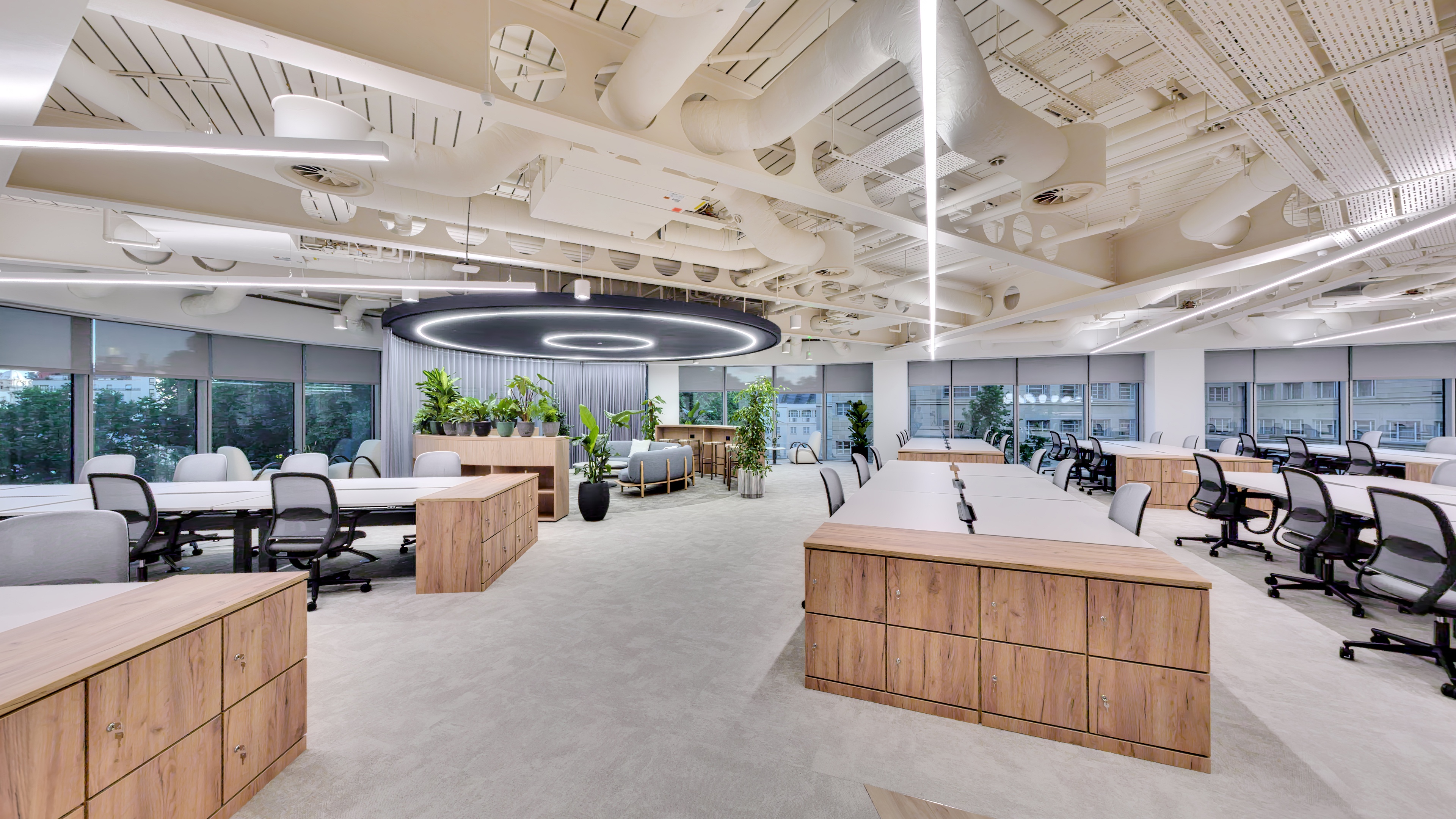
The enquiry comes in on a Wednesday afternoon. A property manager wants a virtual tour of a 2,000 sq ft commercial unit in Marylebone — currently tenanted, in use, with a handover coming in three weeks. Can we be on site by Friday?
That kind of brief is normal for London work. Tight timelines, occupied spaces, buildings with shared access and building manager sign-off requirements. What makes the difference is knowing the process well enough to move quickly — and being the operator who actually shows up, rather than a broker dispatching a freelancer.
Here's what commissioning a professional virtual tour in London actually involves, from first enquiry to delivered link.
Quick takeaways
- A professional London scan typically takes 2–4 hours on site; tours are delivered in 3–5 working days
- Independent research commissioned by Google (2015) found businesses with a virtual tour are twice as likely to generate interest through their Google listing — important in London's competitive local search landscape
- Every See3D scan is handled personally — no outsourcing, no agency layer between you and the operator
Virtual tours of London: explore the city from your sofa
First, the other meaning of the phrase — because "London virtual tour" covers two very different things. If you want to take a virtual tour of the capital itself, you are spoiled: VisitLondon's free 360 virtual tours and panoramic 360 video let you immerse yourself in iconic London landmarks — Big Ben, Westminster Abbey, St Paul's Cathedral, Buckingham Palace, the Thames at night — and the National Gallery offers a Google-powered walk through its rooms, as do most major museum collections. For something more personal, knowledgeable Blue Badge guides run live guided virtual experiences over Zoom — a legacy of lockdown that stuck because it works — with commentary, hidden gems, and themed tours of London from Sherlock Holmes's Baker Street to the Mayfair of Jeeves and Bertie Wooster. Educational, easy to engage with, and a guide will happily tailor a private tour for a visitor or client joining from anywhere in the world. You can discover and learn a lot about London's history without leaving home.
Immersive virtual tours of your own London venue: the specialist route
This page, though, is about the second meaning: commissioning an interactive, 360-degree virtual tour of your own space — a hotel, restaurant, office, venue or property — so that customers can virtually walk through it before booking. That is specialist work: 3D capture, interactive hotspot navigation, and the technical expertise to make a tour that drives engagement rather than just existing. Here's what working with a professional London provider actually involves, from first enquiry to delivered link.
Before the scan: preparation makes the difference
The scan captures the space as it is on the day. Preparation is the client's responsibility, and the quality of the final tour is directly related to how the space presents.
A brief checklist for most spaces:
Clear surfaces. The scanner captures everything within range. Clutter — personal items, temporary signage, anything that wouldn't appear in a press photograph — will appear in the tour. A 10-minute declutter before we arrive is worth more than any amount of post-processing.
Get the lighting right. Every light source in the space should be on and working. Blown bulbs, dark corners, and mismatched colour temperatures all show in a 134-megapixel panorama in a way they wouldn't in a standard photograph. Open blinds and curtains to bring in natural light where the space benefits from it.
Prepare access. London buildings frequently have security procedures, building manager sign-in, lift access keys, or restricted floor access. Confirm all of this in advance and let us know what we'll need on arrival. A 20-minute delay at reception costs time across the whole scan schedule.
Dress the space. For hospitality and residential properties, presentation matters. Set the table. Style the bridal suite. Park the featured vehicles in position. A furnished room reads as larger and more inviting than an empty one — the scanner is impartial, but the person viewing the tour is not.
The scan day: what actually happens
We arrive with the Realsee Galois M2 — a single compact scanner, no additional crew, no lighting rigs. The unit is placed on a tripod at each scan position and captures a 134-megapixel, 16K panoramic image while simultaneously recording LiDAR point cloud data.
Each scan position takes a matter of minutes. The operator moves through the space in a planned sequence — typically starting at the main entrance or primary space and working outward — placing the scanner at multiple positions per room to ensure complete coverage with no blind spots.
For a standard two-to-three bedroom residential property, the full scan typically takes two to three hours. A commercial unit of around 1,000 sq ft takes a similar amount of time. Larger or more complex spaces — multi-floor commercial buildings, venues with multiple event rooms, properties with significant outdoor areas — are scoped individually.
During the scan, people in the space need to move clear of each position before it captures. We coordinate this on site. For occupied commercial buildings, we work around the workflow of the people using the space rather than requiring the space to be vacated — though an empty space is always easier to work in.
Outdoor areas and drone coverage
360° scanning covers exterior spaces as well as interiors. Building frontages, garden terraces, courtyard areas, and outdoor event spaces can all be included in the ground-level scan.
For London properties with significant outdoor areas — a hotel garden, a rooftop terrace, a venue with event lawns — we pair ground-level scanning with drone footage where the space and permissions allow. The combination gives a viewer a sense of the setting from above that no interior scan can replicate.
Drone operations in central London require awareness of controlled airspace. We handle the relevant checks and permissions as part of the commission — this is factored into the quote rather than added later.
What you receive on delivery
Every tour comes with the same core deliverables:
- Hosted tour link — a URL that works immediately, shareable by email or embedded anywhere
- Embed code (iframe) — paste directly into any website, booking platform, or property portal
- Shareable URL — for direct distribution to buyers, tenants, event enquiries, or remote teams
From confirmed site visit to live tour link: 3–5 working days. We confirm the exact delivery date before the scan takes place.
If floor plans were included in the scope, these are delivered alongside the tour — typically as PDF for marketing use and DWG for technical teams. LiDAR point cloud data (in .las, .e57, or .rcp format) is delivered separately where commissioned.
How See3D covers London
We're based in London and handle all scan work personally. The same people you speak to during the enquiry process are the ones who show up on site. There's no outsourcing to third-party operators and no agency layer.
Most London commissions are within a single day's site visit. For central London and Greater London locations, travel is included within the standard quote. For sites outside Greater London, we'll confirm travel arrangements at the quote stage — we cover the UK, not just the city.
For multi-site commissions — an estate agent with multiple active listings, a hotel group with properties across London, a commercial property manager running concurrent projects — we work as a retained operator rather than a one-off supplier. Get in touch to discuss ongoing arrangements.
The commercial case for a London virtual tour is well-documented. According to Zoopla's December 2024 platform analysis, 80% of property buyers check the floorplan before looking at photos — buyers arrive wanting spatial context, not just images. Independent research commissioned by Google in 2015 found that businesses with a virtual tour on their Google listing are twice as likely to generate interest — measured as reservations and in-person visits — compared to those without. For London businesses operating in one of the most competitive local search environments in the country, that is a material advantage.
Sources & references
- Independent research commissioned by Google, 2015. "Businesses with a virtual tour are twice as likely to generate interest through their Google listing." Sample: 1,201 respondents. streetvisit.com