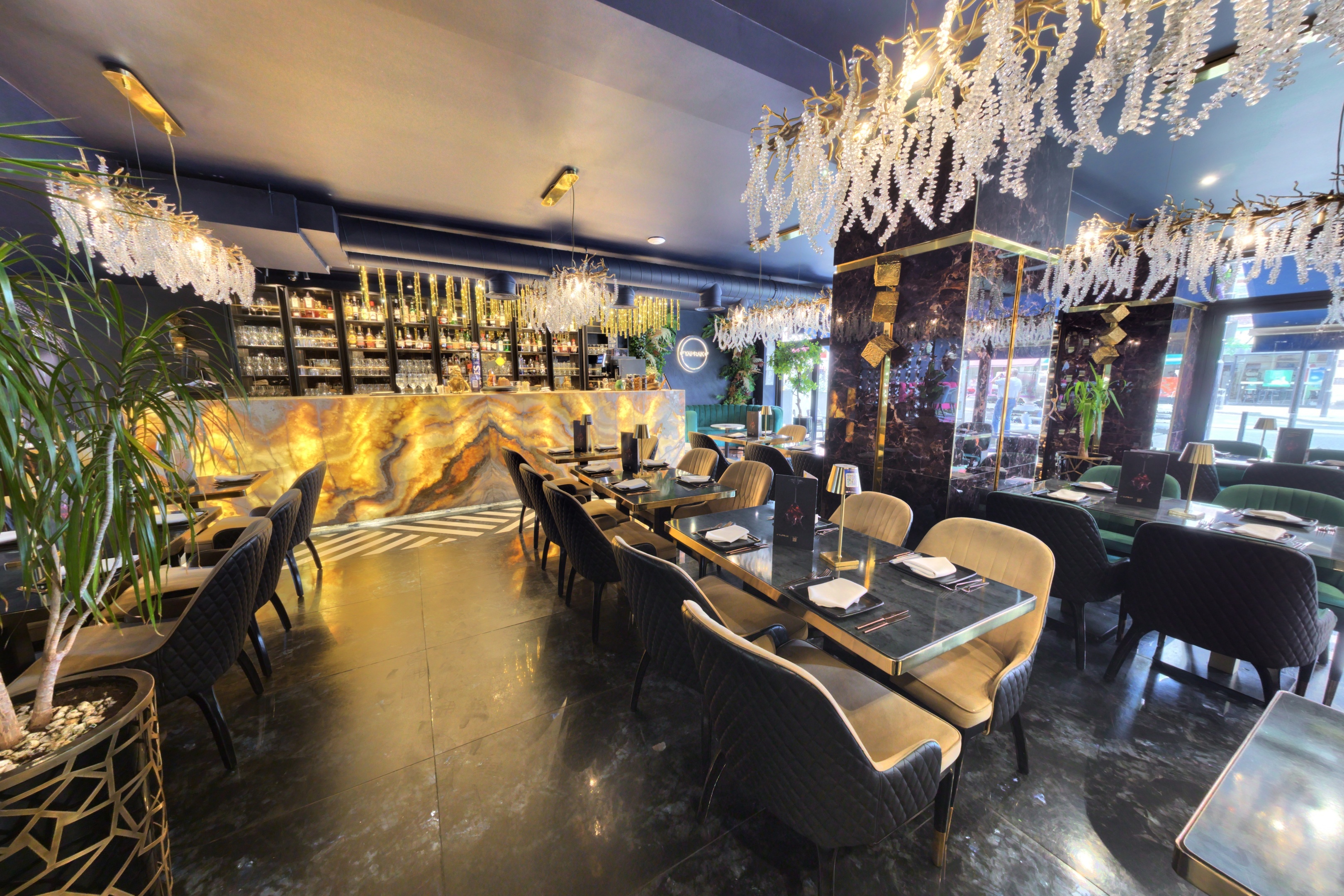
A restaurant booking decision isn't purely about the menu. The atmosphere, the table spacing, the lighting, the proximity of tables to the kitchen pass — these are things a press photo can hint at but rarely communicates accurately. A 360° virtual tour lets someone walk through your dining room before they call. It answers "is this right for our anniversary dinner?" at 11pm on a Tuesday when your host has gone home, and lets that couple arrive at your door having already decided they want to be there. For private dining and corporate events, it goes further: a planner comparing venues for a client dinner needs to assess capacity and configuration without visiting all of them in person. A virtual tour can make that shortlist decision for them.
Quick takeaways
- In a 2015 study commissioned by Google, 67% of respondents said they want more businesses to offer virtual tours — the expectation exists in dining as much as hospitality
- Virtual tours on Google Business Profile can double a restaurant's interest in local search results (Google)
- One scan covers main dining room, private dining, bar, and terrace — serving restaurant bookings and corporate events from the same tour
What diners actually want before they book
Diners research restaurants the same way consumers research everything else: online, on their phone, often late in the evening. Photography communicates the food. A virtual tour communicates the experience. The two do different jobs.
The atmosphere question — "will we be comfortable here, will it be too loud, too formal, too close?" — is one that photography rarely answers directly. A virtual tour lets a prospective guest orient themselves: where the bar is relative to the dining room, how the tables are spaced, whether the lighting is intimate or bright. That's not a luxury feature; it's the information the booking decision actually requires.
In a 2015 study commissioned by Google, 67% of respondents said they wanted more businesses to offer virtual tours. For restaurants where the difference between a shortlisted venue and a confirmed booking often comes down to confidence in the atmosphere, that expectation is worth meeting. Diners who have already explored a space digitally arrive with formed intent — the booking decision is made before they pick up the phone.
Which spaces to include
Main dining room: the obvious starting point. Multiple scan positions to show the full room, corner tables, and any distinctive architectural features.
Private dining room: high conversion value, often undersold on restaurant websites. Corporate event planners, group bookings, and celebratory dinners all require a sense of the private room before any other conversation happens. A tour of this room embedded on your events enquiry page removes the "can we come and see it first?" delay from your sales process.
Bar and reception: for restaurants with meaningful pre-dinner drinks or bar trade, this communicates a second experience that photography rarely captures well.
Outdoor terrace or courtyard: the single biggest differentiator from April to September. If you have a terrace, it should be in the tour — it's the question prospective guests ask most often during summer months.
Open kitchen (optional): an open kitchen is a transparency and confidence signal worth capturing. A closed kitchen is generally better left out.
The private dining and events cross-sell
The logic here is the same as for wedding venues: one scan session produces two separate marketing tools. Your restaurant tour and your private dining tour are navigated independently, promoted to different audiences, and linked from different pages on your website.
Corporate event planners booking client dinners work three to six months ahead. They manage multiple events simultaneously, are comparing multiple venues, and have clients — not just their own preference — to satisfy. They research remotely, from other cities, sometimes from abroad. A virtual tour of your private dining room embedded on your events page means they can assess your space, check it matches the brief, and send it to their client for approval before any call with your team.
This shortens your sales cycle and reduces the effort your events team spends at the top of the funnel.
Google Street View, Matterport or standalone: how the technology fits together
Creating virtual tours for restaurants comes down to three placements rather than three products. A Google Street View tour connects your 360° virtual tour to Google Maps and Google Search, so anyone checking the listing can step inside straight from the search results — proven to attract more customers in local search, and the foundation of online visibility for hospitality across the UK, from a vibrant Manchester grill house restaurant in a Grade II listed building to a London hotel bar. A Matterport-style 3D capture produces digital twins with a subscription attached. And a standalone immersive virtual tour — the See3D model — can be embedded on your website with seamless, high-quality results and no recurring fee, then reused everywhere: Instagram, marketing campaigns, even a VR headset for leisure and events partnerships.
Whichever route you host it on, the interactive layer is what earns the click: clickable information hotspots on the menu, the wine wall and the private dining rooms; lighting and architecture rendered as the real-world diner experiences them, not as static images suggest. It is the difference between telling potential customers to explore your space online and actually letting them — and that insight is why tours upgrade engagement, build trust, reduce no-shows and attract new business while the centre of the room is still being polished for service.
How the scan works in a live restaurant
Timing: scanning outside service hours is standard — early morning, or in the gap between lunch and dinner service. Most restaurant scans complete within two to four hours depending on the number of spaces.
Presentation: the space should be dressed as for service, not cleaned down. Tables set, lighting on, decorative elements in place. The goal is to show your restaurant as it looks when guests arrive — not after closing.
Access: we work from room to room with minimal disruption. Back-of-house (deliveries, prep kitchen, staff areas) can be excluded by request. If the restaurant is operating a breakfast or brunch service while we're scanning, we can work around it.
Five ways to use the tour after delivery
- Website booking page: embed directly on the page where guests click "Book a Table" — it's the last piece of information they see before confirming
- Google Business Profile: virtual tours appear within your Maps listing, visible to anyone searching your restaurant by name or location
- Private dining enquiry response: include the tour link in the first email back to a private dining enquiry — it moves the conversation forward without a call
- Press and media kit: food writers and journalists covering your restaurant can tour the space remotely before a visit
- Event platform listings: where platforms like SquareMeal or Hire Space support virtual tour embeds, include your link on your venue profile
Hosting options include permanently hosted tours with no recurring fees. Get in touch to discuss your restaurant — we'll advise on which spaces to include and give you a clear quote.
Sources & references
- Independent research commissioned by Google, 2015. "67% of respondents said they wanted more businesses to offer virtual tours." Sample: 1,201 respondents. streetvisit.com