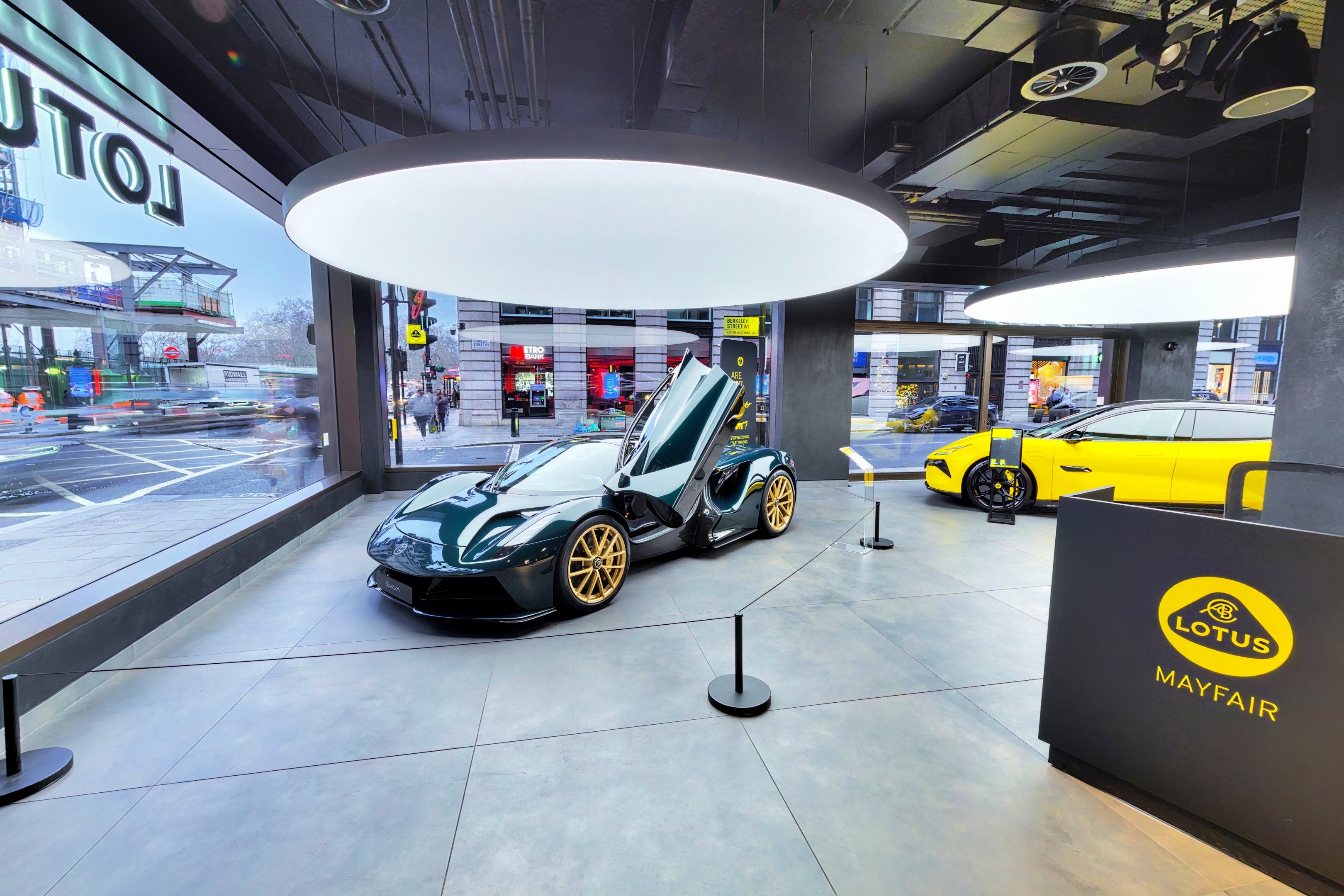
Most car buyers have narrowed their choice before they walk through your door. They've read the specs, watched the reviews, and looked at every photo you've published. What they haven't been able to do — until now — is walk around your showroom on a Sunday evening when you're closed, assess the atmosphere, check how the cars are lit, and get a real sense of the presentation. A 360° virtual tour gives them that. At 134-megapixel, 16K resolution, the paint finish on a midnight blue coupe is visible down to the metallic fleck. Here's what a showroom virtual tour includes, how the scan works around live vehicles, and why high-intent buyers increasingly expect this level of pre-visit transparency.
Quick takeaways
- The automotive buyer's journey now happens almost entirely online before any showroom visit — the environment you present is part of the brand decision
- At 134MP / 16K, paint depth, interior material grain, and metallic finishes render accurately at any zoom level
- Vehicles don't need to be moved — the showroom scans as it trades, with minimal disruption
The research journey before a showroom visit
The automotive buyer's journey now happens almost entirely online before any physical contact with a brand. Digital research — model comparison, finance calculators, configurators, and increasingly, virtual showroom walkthroughs — shapes the shortlist before a buyer picks up the phone or books a test drive. For luxury vehicles, where the purchase decision is significant, considered, and often aspirational, the environment you present matters as much as the product specification.
That pre-visit research phase is when buyers form a view of your brand. Photography communicates the product. A virtual tour communicates the experience. The two serve different purposes, and neither fully replaces the other: photography for impact, virtual tour for conviction.
The practical consequence: a prospective buyer comparing two showrooms will spend meaningfully more time with the one they can actually walk through. According to multiple industry studies, website visitors spend 5–10x longer on pages that include a virtual tour compared to those with static imagery only.
From Mercedes to CUPRA: how the automotive world already uses 360
The big marques set the expectation. Mercedes-Benz, BMW and Honda all operate virtual showroom experiences in the UK, SEAT and CUPRA run live virtual appointments where a host walks the customer around the latest model on camera, and every major dealer group publishes a 360 vehicle tour on its used stock — the spin-around exterior plus car interior 360 photography that lets a buyer explore the cabin from the driver's seat. Some have gone further into virtual reality, with VR configurators in flagship sites. The interactive 360 technology is the same family as the showroom tour; the difference is the subject — vehicle versus environment — and a dealership benefits from both.
The showroom tour is the piece most dealers still miss. A Matterport virtual tour is the option most often pitched (with the usual subscription attached); See3D delivers the same interactive experience at high resolution, hosted free, and connected to your Google business listings — where searching customers actually find you. Shared to Instagram and embedded on the site, it does what photography alone can't: it builds trust in the owner's environment before the visit, which is precisely where the competition for the enquiry is won. A digital walkthrough won't replace the test drive — it gets the right potential customers to book one.
What 134MP resolution means in a showroom context
Standard 360° cameras used by most virtual tour companies typically capture panoramas at 12–30 megapixels. Zoom in on a door card, a steering wheel insert, or the dealership's logo above the service reception and the image degrades visibly.
The Realsee Galois M2 captures 134-megapixel panoramas at 16K resolution. In a showroom context that means:
- Paint finishes render with accurate colour and depth — solid, metallic, and pearlescent all differentiate correctly
- Wheel designs and brake caliper colours are visible without pixelation
- Interior materials — leather grain, brushed metal trim, carbon weave — hold detail at zoom
- Signage, lighting rigs, and branded displays render crisply across the full panorama
For a luxury marque where every surface detail communicates quality, resolution is not a technical footnote. It is part of the brand statement.
How the scan works around live vehicles
A common concern is disruption. The reality is that most showroom scans require no vehicle movements at all. We plan scan positions around the existing layout — working between and around cars to achieve clean sight lines without repositioning inventory.
For purpose-built scanning of a new showroom opening, or where a client wants vehicles positioned with specific presentation in mind, we coordinate with your team beforehand. In most cases, the showroom scans as it trades.
Timing is flexible: early morning before opening, a quieter period at lunch, or the evening after closing — whichever minimises impact on your team and customers. For our work with luxury automotive clients — including scan commissions for Lotus — this flexibility means scan days are completed without disrupting the trading environment that the tour is there to showcase. A mid-size single-brand showroom typically takes half a day on site.
Floor plans and brand compliance
The point cloud data captured during a showroom scan produces dimensionally accurate floor plans — to PDF and DWG from the same site visit. For multi-site brands, this serves two purposes.
First, it provides an accurate reference for refurbishment and fit-out planning. Rather than working from drawings that date from the original build, a fresh scan confirms current conditions before any contractor pricing.
Second, it enables brand compliance verification. Manufacturers and importers with presentation standards — vehicle zones, display specifications, signage placement — can use scan-derived floor plans to verify configurations without repeated physical audits. One accurate scan becomes the reference point.
Where to publish and share the tour
The tour is delivered as a hosted link and an iframe embed code. Typical placements for a showroom:
- Website: embedded on your "Visit Us", brand landing, or new model launch page
- Google Business Profile: virtual tours appear within your Maps listing, visible to anyone searching your brand in the area
- WhatsApp: shareable link works directly in chat — sales teams use this in prospect conversations before the test drive invitation
- Press and media pack: journalists and influencers covering a model launch can tour the space remotely
Hosting options include permanently hosted tours with no recurring fees. Your tour stays live as long as you need it, without a subscription renewing in the background. Get in touch to discuss what a showroom tour looks like for your site.