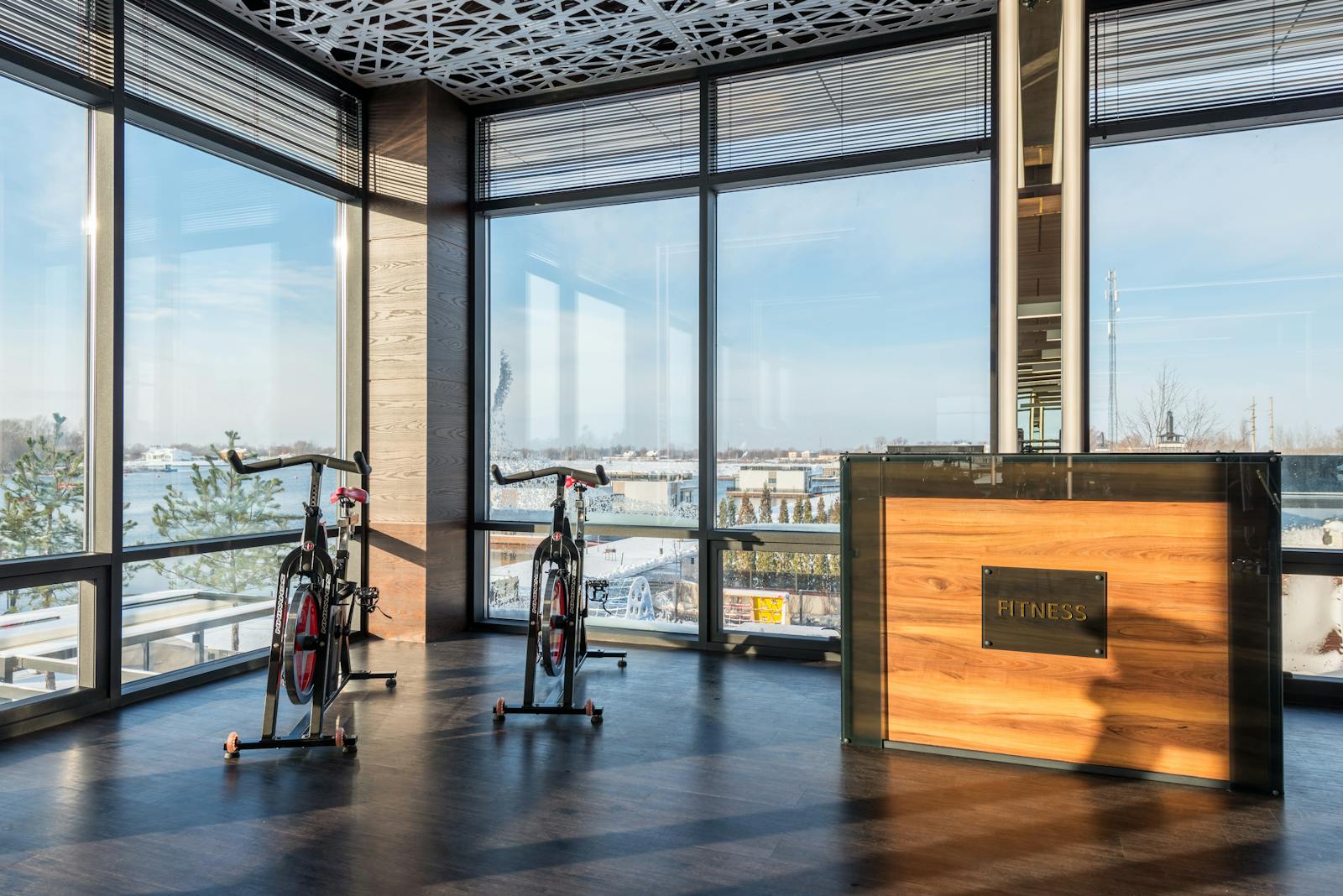
Joining a gym involves a decision that most people spend several days making. They research online, compare options, look at photos, and often talk themselves out of visiting three places before committing to one. For independent gyms and boutique studios — where the space, the equipment, and the atmosphere are the primary differentiators from large chains — a virtual tour is the most direct way to show a prospective member what they're considering paying for before they set foot inside.
Quick takeaways
- Prospective members research gyms digitally before visiting — a virtual tour is visible at the point the decision is being made
- Equipment, space, and atmosphere are the buying criteria — all three are communicated directly in a 360° tour
- For boutique studios with multiple room formats, each zone can be navigated independently from a single tour
What prospective gym members are actually assessing
The barriers to joining an independent gym or boutique studio are primarily informational. The prospective member wants to know: what equipment is available and in what condition? How busy does it get? Is the space clean and well-maintained? Is it intimidating or welcoming? Will I feel out of place here?
Photography answers some of those questions partially. A virtual tour answers them directly. A prospective member who has navigated the gym floor, looked at the racking, seen the studio space, and checked the changing rooms before their first visit arrives with formed expectations — and is significantly less likely to leave without joining than someone who walks in cold.
For boutique studios — Pilates, yoga, spin, boxing, functional fitness — the differentiation from competitors is often entirely about the space and the experience. A studio with high-quality equipment, good natural light, and considered design has a story to tell that photography cannot fully communicate. The virtual tour tells it.
The membership sign-up funnel
The typical digital journey for a gym membership decision looks like: Google search → gym website → prices page → gallery or photos → sign-up form or trial booking. A virtual tour embedded on the membership or sign-up page changes this journey in one important way: the prospective member confirms their decision to join before they start entering their details.
Form abandonment on gym membership pages is high — people reach the sign-up form, hesitate, and leave. A virtual tour on the same page gives them a way to confirm their conviction before committing. It reduces the number of people who get to the form without being certain, and therefore reduces the abandonment rate among those who continue.
For studios with tiered memberships — different access levels, day passes versus monthly — the tour also helps prospective members understand what they're buying into, which reduces post-purchase dissatisfaction and member churn.
Take a virtual tour: what the best gym examples already do
The pattern is established at both ends of the fitness market. UltraFlex Gym — the bodybuilding chain — publishes a gym virtual tour for its sites so people can see the equipment range before they join, and Village Gym embeds an interactive virtual tour of each health club location on its website: pool, gym floor, class studios, the lot. The format is simple and free to view — take a virtual gym tour online, look inside virtually, get a feel for the light, the atmosphere and the team, then visit, try a class or contact the centre to join. For any fitness business, that 3D virtual tour project does what no photo can: it presents the whole space honestly, makes every important area accessible from search and social media, and turns a customer's idle curiosity into engagement with the membership funnel. One scan creates the content; the marketing experience it provides keeps working in every search result and ad you run, highlighting the property exactly as a member will experience it.
The competition gap for independent operators
The Bannatynes and PureGyms of the UK have marketing budgets that independent gyms cannot match. What they cannot offer is what makes independent gyms worth joining: a specific environment, a curated equipment selection, a community feel. A virtual tour is the most efficient way to communicate exactly those qualities to someone who has never visited.
Most virtual tour content in the gym sector comes from the large chains and is produced at generic quality. For an independent gym with genuinely good facilities and environment, a 134MP tour is a visual statement that chain operators can't replicate with their template content. The gap between what a boutique studio looks like at 134MP and what it looks like in a standard gym website photo is significant — and it works in favour of the independent operator who invests in the tour.
Which areas to include
Main gym floor: full coverage showing the equipment range, floor space, ceiling height, and any distinctive design features. Multiple scan positions to show the floor from different angles.
Studio space(s): for gyms with dedicated class rooms — reformer studio, spin room, functional training area — each should be scanned as a separate zone. Class-format-specific tour embeds on the relevant class pages of the website increase booking conversion for individual formats.
Changing rooms: often skipped, but frequently asked about. A clean, well-designed changing room shown in 360° is a quality signal that removes a common pre-join hesitation, particularly for new members who haven't used a gym before.
Reception and lounge area: for studios with a social or community dimension — a coffee area, a member lounge — this communicates the atmosphere beyond the workout itself and supports community-driven membership positioning.
See3D scans outside class hours, with the gym set up for a normal session. Get in touch to discuss your facility — we'll advise on scope and give you a clear quote based on the size and number of spaces.