You found a 360 virtual tour company online. The website shows polished example tours, a professional look, and a credible client list. You make contact, discuss your requirements, and book a scan. The virtual tour photographer who arrives at your site may not work for that company at all.
A significant portion of the UK virtual tour market operates on a franchise or contractor model. The company you contact is a platform or brand; the photographer who actually visits your site, sets up the equipment, and captures your space is a third-party freelancer sourced through a network. They may be experienced. They may not be. The company you booked with may never have met them.
Quick takeaways
- Many UK virtual tour companies dispatch third-party contractors to your site — the brand you contact is not always the operator who turns up
- For specialist or access-sensitive spaces, the contractor model introduces accountability gaps that matter when something needs fixing
- One question resolves this before you book: "Who will physically attend my site and operate the equipment?"
What does a virtual tour photographer actually do?
Virtual tour photography is more involved than standard interior photography. The photographer captures a sequence of 360 photographs from planned positions through the space; at each position, the camera records a full spherical view, with HDR exposure bracketing to balance bright windows against darker interiors. The individual 360 images are stitched together into equirectangular panoramas, then linked with navigation hotspots — turning a set of photos into an interactive experience the viewer can walk through.
Equipment varies widely. Some photographers shoot with a DSLR on a panoramic head, others with consumer 360 cameras, and others — including See3D — with LiDAR-enabled scanners that capture measurement data to the centimeter alongside the imagery, enabling floor plans and point clouds from the same visit. The finished 360 tour can be embedded on your website, shared on social media, and connected to your Google Business Profile, where immersive content strengthens your online presence and local visibility on Google Maps. A bespoke virtual tour goes further than a basic Google Street View capture: branded presentation, controlled image quality, floor plans, and no dependency on a third-party platform.
A typical scan takes a few hours on site; with See3D the finished virtual tour is delivered within 3–5 working days.
How the contractor model works in UK virtual tour photography
Virtual tour companies that operate nationally often cannot employ operators in every city. The economics do not support a salaried operator sitting idle in Birmingham waiting for a Birmingham enquiry. The solution many providers have adopted is a network model: a national brand with a central booking and delivery function, and a distributed network of approved contractors who are dispatched to client sites.
From the client's perspective, they are booking with the brand. In practice, they are booking a contractor the brand has vetted to some standard — but who operates independently. This model is not inherently problematic; it is how many service businesses scale. The risk is in what it means for accountability and consistency: the contractor who scanned your first property may not be available when you book a second. The level of experience with your type of space varies across a contractor pool in a way it does not across a dedicated in-house operator. And when something goes wrong — a missed capture, a poorly framed panorama, a rescan that is needed — the accountability chain runs through the contractor, not the company you dealt with. The client finds this out, usually, when the tour arrives and doesn't look right.
What it means for specialist spaces
For straightforward spaces — a retail unit, a standard apartment, a clean office floor — the contractor model often works adequately. The scan is repeatable and the variables are limited. For specialist spaces, the stakes are higher.
Hospitality and venues. Scanning a hotel, nightclub, or event space requires access coordination with housekeeping, concierge, and front-of-house management. The operator needs to understand the operational context — which areas are in scope, how the lighting should be set, what is excluded from the public-facing tour. A contractor arriving without that briefing produces a different result.
High-value retail and showrooms. A luxury automotive showroom or premium furniture brand has specific expectations about how their product environment is represented. The operator needs to understand those expectations before they walk in.
Construction sites and LiDAR surveys. As-built surveys, point cloud captures, and multi-floor construction documentation require site-specific induction, understanding of which phases are in scope, and methodical coverage. This is not a task for an unfamiliar contractor.
Premium residential properties. Wide variations in output quality are common across contractor pools. A high-value property requires an operator who understands staging, framing, and the specific requirements of residential presentation for estate agents and their clients.
Education, culture, and leisure. A campus virtual tour for a university, a theatre, a museum, or a yacht each brings its own access, lighting, and presentation demands. Experience with comparable spaces is what separates an adequate result from the best 360 virtual tour your budget can buy.
Where to find a virtual tour photographer in the UK
Most searches start the same way: "360 virtual tour photography" plus a city, or a browse of Google Maps listings. Portfolios tell you more than directories. When comparing virtual tour companies, look at actual tours they have published — not showreel clips — and judge sharpness when you zoom, exposure in mixed lighting, and how naturally the tour flows between positions.
Then compare on the details that affect the result: capture resolution in real pixel terms (ask for the panorama dimensions, not "HD" or "4K"), HDR processing, whether you own the tour outright or pay a subscription, and — the subject of this article — who physically attends your site. Cost scales with floor area and deliverables; our guide to virtual tour costs in the UK breaks down what providers charge and why.
The question to ask before you book a 360 virtual tour
Before committing to any virtual tour provider, ask one direct question: Who will physically attend my site and operate the equipment?
The answer will tell you a great deal. If the answer is "one of our trained operators" or "a local freelancer from our network," follow up: Is the same operator available for any rescan or follow-up visit? Has that operator scanned a comparable space before? Can you speak to them before the scan day?
A provider who handles scanning in-house will answer these questions without hesitation. A provider who brokers through a network may be evasive — or may not know the answers themselves until they make a booking request to their contractor pool.
How See3D works
At See3D, every scan is handled personally. That means the same person — the same operator, with the same equipment and the same understanding of your brief — attends your site, carries out the capture, processes the output, and delivers the finished tour. From initial enquiry to live tour, you deal with one point of contact throughout.
This is not a scalability strategy. It is a quality commitment. The consequence is that we do not take on every enquiry — we are not the right provider for a client who needs fifty scans completed across thirty locations in two weeks. We are the right provider for clients who need one scan, or a managed portfolio of scans, done correctly.
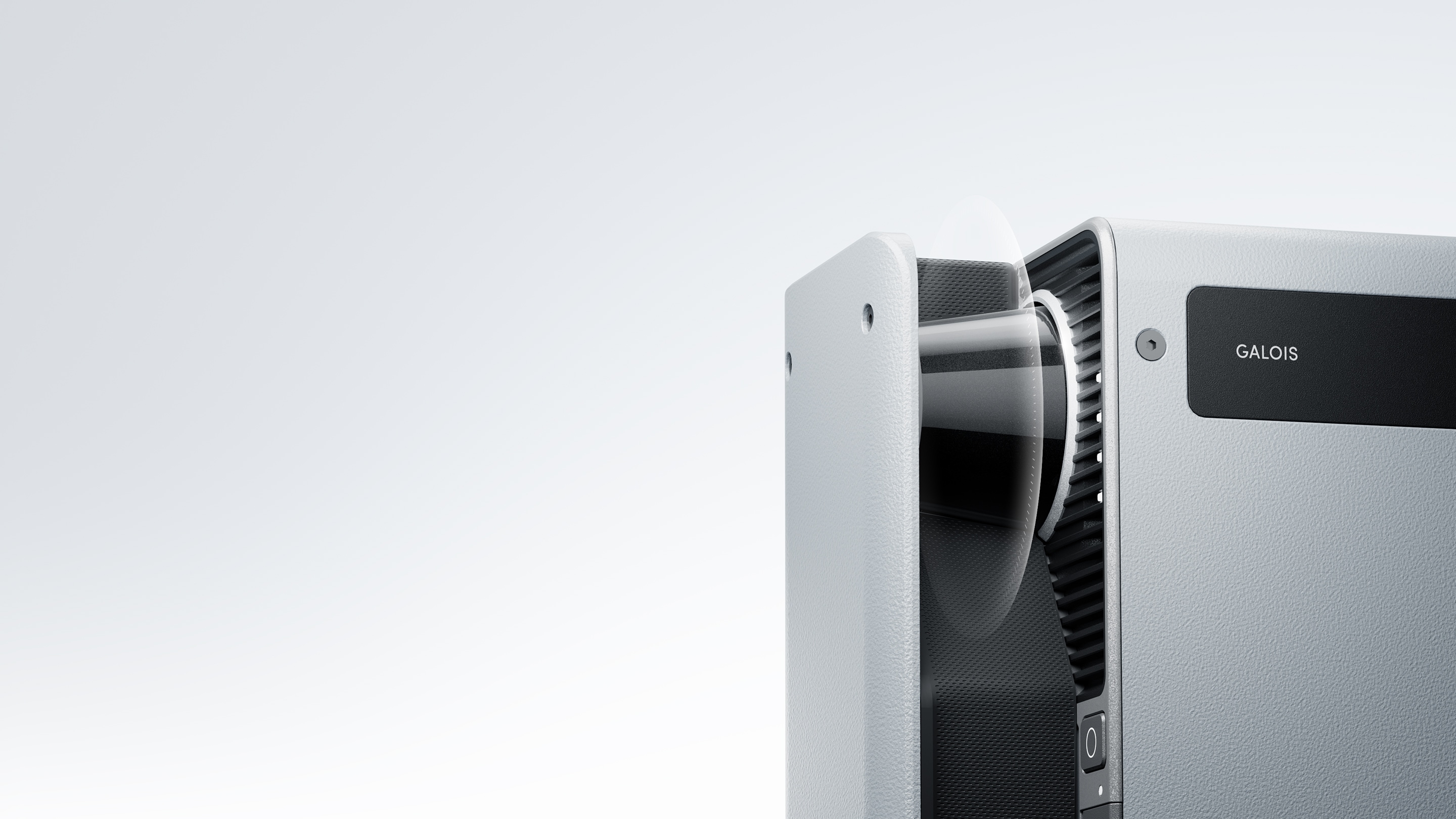
The Realsee Galois M2 captures 134 megapixel, 16K HDR panoramas — high quality 360 imagery at the top of the UK market. But that specification is only as good as the judgement applied on scan day: how the equipment is positioned, how the lighting is managed, which areas receive additional capture passes, and how the output is graded in post-processing. In professional 360 virtual tour photography, that judgement is not interchangeable between operators.